
Applause cracked through the winter air as cameras captured everything they were never meant to catch. A slow walk beneath Christmas lights — warm, intimate, almost cinematic — collided hours later with a confrontation that sent shockwaves through Washington. A sealed document raised like a blade. A chamber holding its breath. A sense, unmistakable and electric, that power was slipping in real time. By nightfall, one image and one eruption had fused into a single, volatile question: What do truth and trust even mean in an age where every gesture becomes evidence?
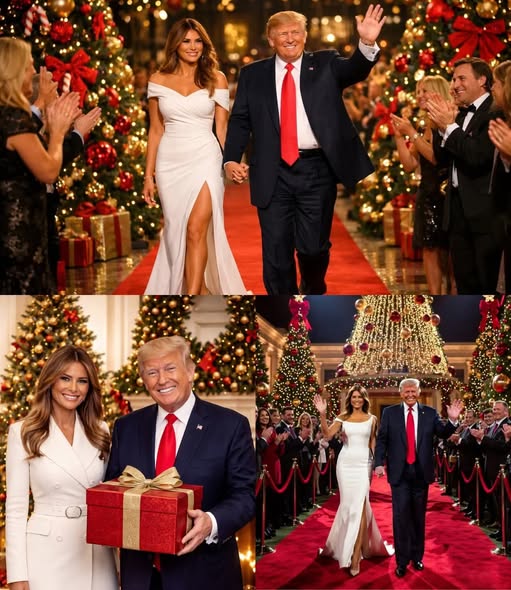
The quiet walk, filmed from a distance, was the opening scene no one recognized as a prelude. Under the soft glow of holiday decorations, the two figures appeared at ease, their closeness prompting whispers but no conclusions. Yet the moment the clip spread online, tenderness was reframed as strategy, and the holiday warmth dissolved under the harsher light of public suspicion. It became a symbol — not of personal affection, but of a political culture obsessed with decoding motives before understanding facts.
Hours later, inside the Senate chamber, the subtext shattered into open conflict. When Adam Schiff called for security, few expected Marco Rubio to respond with such disarming calm. He lifted a sealed envelope — not dramatically, not theatrically, but decisively — and placed it into the record. The chamber’s gasp echoed across the country. Something scripted had slipped. Something tightly managed had ruptured. And for a moment, the political stage felt startlingly unscripted.
As the document entered history, the moment stopped belonging to the people inside that room. It became public property — dissected frame by frame, argued over in comment sections, recut into clips that carried meanings the original moment never intended. Every caption, every theory, every emotional reaction layered new interpretations onto the same set of images. The day transformed from an isolated confrontation into a referendum on authenticity itself.
Were the gestures sincere? Was the conflict real? Who was performing — and for whom?
In the end, it wasn’t the Christmas lights, or the applause, or even the accusation that lingered. It was something far quieter, and far more unsettling: the realization that in a political era saturated with explanation, silence can feel like the most dangerous posture of all. That what remains unspoken — the withheld message, the unclarified motive, the sealed document — can ignite more tension than any speech delivered at full volume.
The day became a mirror, reflecting a nation caught between craving transparency and mistrusting every attempt at it. And in that uncomfortable reflection, many saw the same truth: power is no longer merely about what is revealed, but about who controls the moment when revelation arrives